
Observed & Experiential Integration (OEI) Therapy Backed by Neuroscience: Why It Works
The brain processes memories by storing them in the past filing them away in logical order so they can be retrieved and remembered. Traumatic experiences significantly impact memory and involve various brain regions:
Key Brain Areas and Their Roles in Memory
Hippocampus: Responsible for forming and retrieving episodic memories. Trauma can reduce hippocampal volume, impairing its ability to transfer short-term memories to long-term ones1
Amygdala: Governs emotional memory and fear conditioning. During trauma, it becomes hyperactive, intensifying emotional memories and triggering fear responses2.
Prefrontal Cortex (PFC): Regulates emotional responses and decision-making. Trauma can lead to hypoactivity in the PFC, reducing its ability to control fear and emotional regulation.
Posterior Cingulate Cortex (PCC): Involved in autobiographical memory processing and emotional imagery. Trauma alters PCC function, affecting narrative comprehension.
When you experience a trauma, your brain is so overwhelmed that is not able to put the experience into long term memory, therefore you experience memories in the present moment, not as something that happened in the past. The trauma is remembered at the most intense moment. You’re triggered AF and no longer able to regulate your emotions.
Effects of Trauma on Memory
Fragmentation: Traumatic memories are often stored as disjointed fragments (images or sensations) rather than coherent narratives3.
Intrusions: Traumatic memories may intrude uncontrollably with unintentional remembering and intrusive mental imagery4. These differ from regular autobiographical memories due to altered brain processing.
Memory Blocking: The brain may suppress traumatic memories temporarily to protect against overwhelming distress.
Stress hormones like glucocorticoids exacerbate damage to the hippocampus, while heightened amygdala activity reinforces emotional responses, making traumatic memories vivid but disorganized[1][5].
The brain is so overwhelmed with traumatic experiences that it drops the ball and the memory shatters into pieces, because trauma is stored in the brain and body in the present tense, you experience fragments and flashbacks as intrusive thoughts and feelings in your body randomly, as you re-experience the trauma, it perpetuates into your future.
At other times you feel numb and dissociated to get away from the overwhelming distress of these fragmented memories popping up randomly. This is why you feel hopeless, the past is taking up all the space in your future and you’re no longer able to create.
What is Integration and Why Is It Important For Healing Trauma?
OEI therapy focuses on integrating traumatic memories that are often stored as fragmented multisensory representations. Integration involves bringing together the cognitive, affective, and somatic components of these memories so they can be processed and are no longer experienced as intensely distressing or easily triggered.
Integration of Experience: OEI helps integrate physical and emotional intensity between different parts of the brain. Furthermore, OEI facilitates the integration of disparate facets of a client’s experiences, including emotions, physical sensations, and visual perceptions. This can involve integrating different emotional or perceptual experiences associated with each eye during techniques used in OEI, leading to a resolution of distortions in self and other perception.
Neuropsychological Integration: OEI therapy works at a neuropsychological level to reduce the intensity of and integrate posttraumatic states. Accelerated OEI therapy aims to repair the fragments of traumatic events into less intense, more cortical representations.
Research suggests that after OEI treatment targeting transference reactions, there can be a shift in brain activity from deeper brain structures (like the hippocampus) to cortical areas, potentially indicating a shift from visual memory activation to simple visual processing.
Techniques like Switching and Glitch Massaging used in OEI facilitate this neuro-activation and microattunement (NAMA), contributing to increased somatosensory and affective awareness – dual awareness that helps bring you back to the present moment.
Integration of Dissociated Material: OEI therapy is specifically designed to address dissociation, a common consequence of trauma.Techniques like Switching can help resolve “dissociative artifacts” such as headaches, numbness, and visual distortions that can arise during trauma processing. Resolution of visual splitting, where a client perceives a stimulus differently with each eye, is another aspect of addressing dissociation through OEI therapy.
Integration within the Therapeutic Process: OEI emphasizes the importance of empathic attunement and the therapeutic alliance, which is one of the most important factor healing your trauma.
The therapist provides continuous feedback to clients regarding observed physical and emotional changes, which helps validate the client’s internal experience and fosters a sense of being “seen” and collaboration. This relational aspect is integral to the overall process of integration in OEI.
How OEI Therapy Integrates Traumatic Memories
integration is a dynamic process of bringing together fragmented aspects of a client’s experience at psychological and neurobiological levels, utilizing specific techniques to facilitate emotional processing, reduce dissociation, resolve relational distortions, and ultimately lead to a more coherent and functional sense of self and a reduction in trauma-related distress, using targeted eye movements to access and integrate fragmented trauma memories.
Hemispheric integration
OEI aims to facilitate trauma integration by directly addressing the neurobiological underpinnings of traumatic responses, titrating intensity, reducing dissociation, resolving relational distortions, and promoting emotional processing and self-awareness, ultimately leading to a reduction in trauma-related symptoms and an improved quality of life
Coordinated integration of the left (logical, sequential, verbal) hemisphere and right (emotional, sensory, nonverbal) hemispheres of the brain during trauma processing and memory integration.
The right brain is activated AF in PTSD, particularly in hypervigilance and emotional dysregulation. The left brain is not able to process explicit memory formation (semantic and autobiographical memory).
Trauma can remain “stuck” in the right hemisphere (felt as emotions and body sensations) without full contextualization from the left hemisphere, leading to flashbacks and intrusive memories.
Vertical integration
Lower brain structures, such as the hippocampal dentate, thalamus, and amygdala integrate with the cortex and subcortical structures such as the cingulate cortex.
The hippocampus integrates memory into a coherent timeline, but in trauma, it can shrink due to chronic stress, this reduced function leads to disorganized, fragmented trauma memories. Trauma affects the dentate’s ability to distinguish between past and present threats, leading to generalization of fear, and flashbacks (misinterpreting present cues as past danger).
Trauma may disrupt the thalamus’ ability to integrate multisensory information, leading to sensory flashbacks. Your body may is stuck between hypervigilance and dissociation mode via the dorsal vagal system. Trauma disrupts its ability to integrate multisensory information, leading to sensory flashbacks that you feel in your body as if you are re-experiencing the trauma.
The amygdala is hyperactive and triggers heightened fear responses and encodes implicit emotional memories of trauma without time-stamping them in the past, leading to re-experiencing symptoms that hijacks your present.
The cingulate cortex involved in emotional regulation and attention helps regulate emotions by modulating limbic system activation. However, in trauma response, dysregulation can lead to difficulty shifting attention away from distressing memories leading to intrusive thoughts and rumination.
Posterior to Anterior Integration
Parietal to prefrontal cortex, as observed in the classic study by Scott Rauch et al.
Parietal Cortex is responsible for body awareness and where the body is in space. Trauma survivors may experience somatic dissociation or heightened body awareness (hypervigilance).
Prefrontal Cortex (PFC) carries out executive control and emotion regulation suppressing amygdala activation through logical reasoning and engages in emotional self-awareness and perspective-taking. The medial PFC communicates with the amygdala to inhibit excessive fear response to go about normal life. However, in PTSD), it is underactive and fear regulation is impaired, leading to chronic stress responses. Trauma impairs prefrontal modulation of limbic activity, making it harder to regulate emotions and process memories rationally.
Reduced Neurogenesis
Because trauma perpetuates itself in the present moment, the brain has difficulty processing new information.
Trauma hinders proper encoding, leading to gaps in memory (dissociation). Implicit rather than explicit memory storage (memories stored as sensations in the body rather than narratives that can be recalled).
Chronic stress and elevated cortisol levels suppress new neuron formation, impairing memory flexibility. This makes it harder to recontextualize traumatic memories, keeping them fragmented and distressing.
Disruptions in Memory Encoding
Trauma causes incomplete and fragmented storage and therefore, recall of memories along with a dysregulated fear response:
Hyperactivity: Increased sensitivity to trauma-related cues → hypervigilance.
Hypoactivity: Reduced engagement in contextualizing experiences → emotional numbness, dissociation.
Why is Integration Important for healing?
Integration is important because when traumatic memories aren’t integrated we feel stuck, triggered, and unable to move forward with our lives. We are in avoidance and dissociated, which interferes with the brains ability to engage higher-level brain functioning.
When the past is not integrated, we experience symptoms of dissociation and panic symptoms such as a racing heartbeat, tight chest, difficulty breathing, nausea, or “butterflies” in the stomach. We might even experience headaches, visual distortions (ranging from blockage of vision to blurring), tingling or numbness in hands, face, or feet, and drowsiness or light-headedness.
The Outcomes of Integration
Clinical Outcomes as Indicators of Integration
The results of trauma integration through OEI are evident in various clinical improvements:
Reduction of Trauma Symptoms: Decreases in PTSD symptoms, dissociative symptoms, and negative transference reactions.
Improved Affect Regulation: Greater capacity to manage and resolve intense emotional and somatic states.
Increased Self-Awareness: Enhanced ability to understand one’s own internal experiences.
Enhanced Social Connection and Relationships: Improvement in the therapeutic alliance and interpersonal relationships through the resolution of transference issues.
Increased Hope and Empowerment: A greater sense of agency and optimism regarding the future and getting back to who you really are
What Can OEI Help With?
OEI has been used to address a wide range of psychological and emotional issues:
- Trauma
- PTSD
- Anxiety
- Phobias
- Depression
- Sexual assault
- Childhood abuse and trauma
- Eating disorders
- Negative self-talk
- Relationship conflicts
- Self-esteem problems
- Compulsions
- Agitated depression
- Body dysmorphia
- Dissociation
- Substance use
Many of these issues are a result of a non-resolved traumatic experience. Basically, anything that makes you feel “stuck” or triggered AF will usually benefit from OEI treatment.
OEI therapy can also be accelerated with hypnotherapy to assist with connecting with the high-functioning person you used to be and moving forward into a whole new future. You haven’t lost your motivation, you’re not procrastinating, you’re stuck in trauma.
OEI therapy can create shifts, even if you’ve been in therapy for years and you’re hopeless.
If you’re ready to put the past behind you, and move forward to a whole new future, let’s connect.
Listen, are you breathing just a little and calling it a life?
-MO
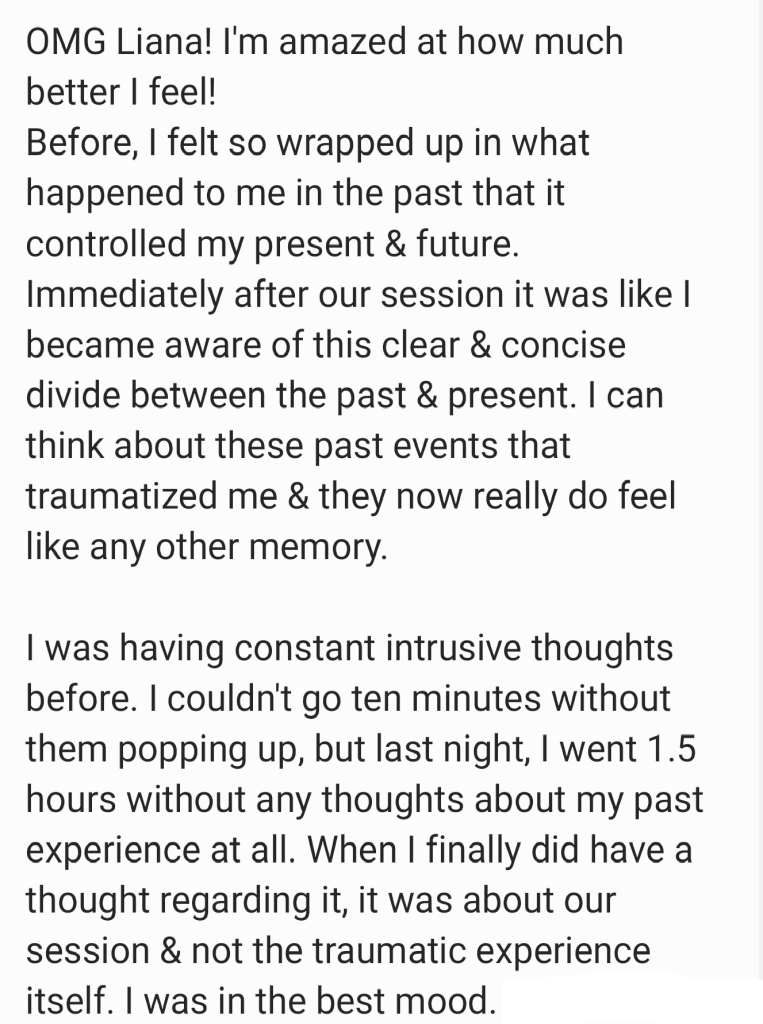
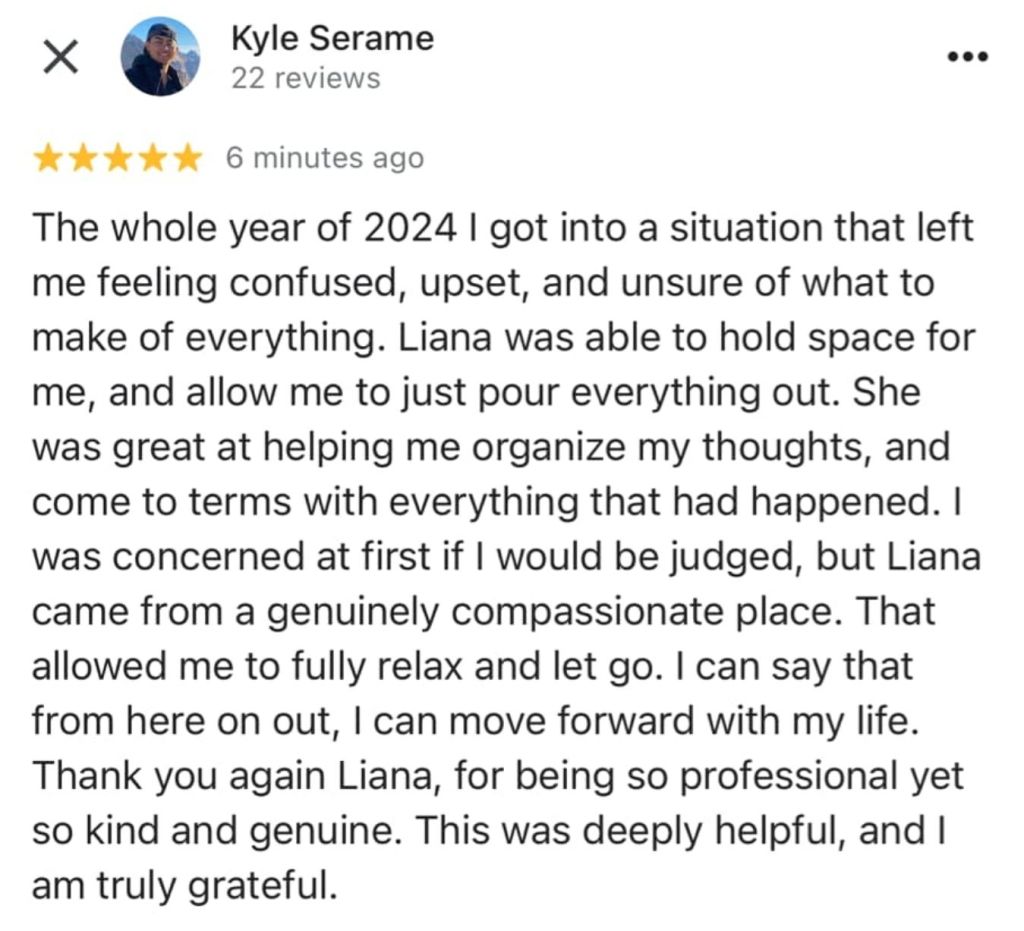
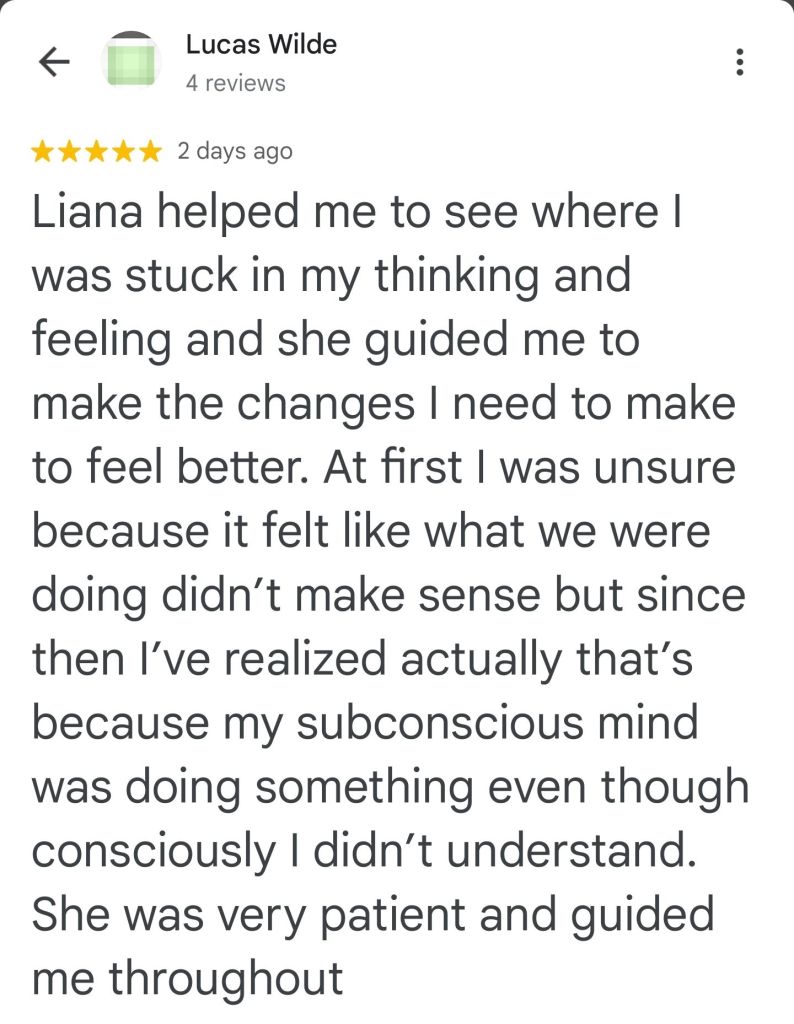
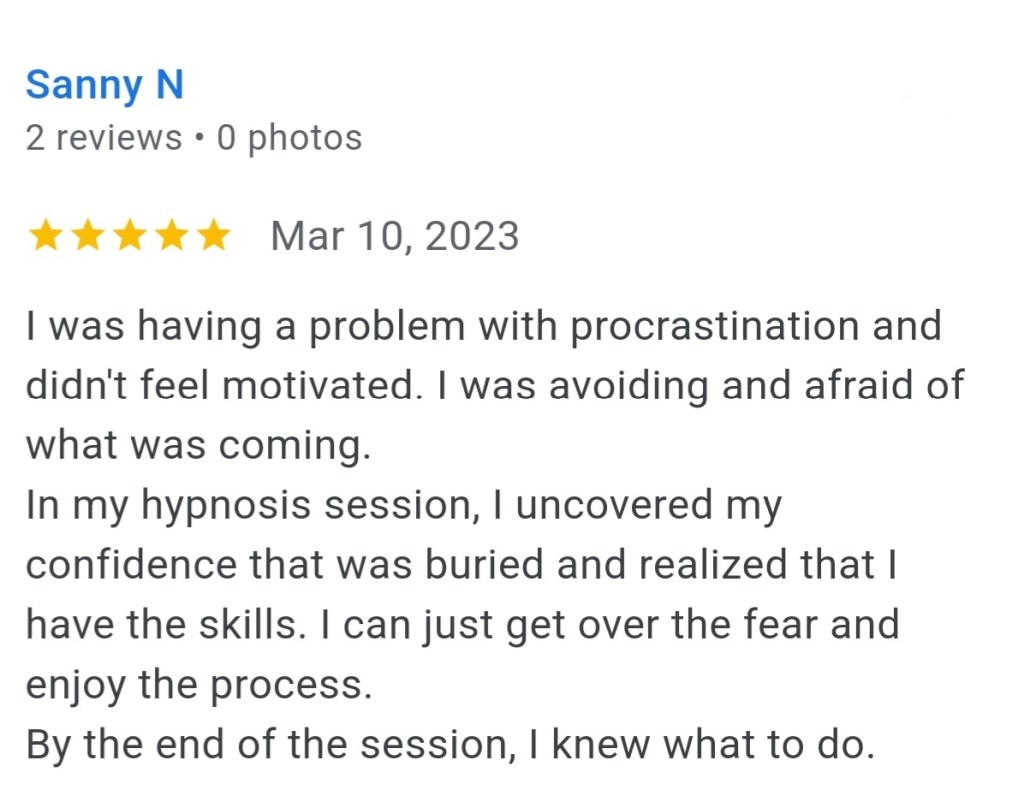
Reviews






























 Accelerated OEI Therapy
Leave a comment