
How Does OEI Work?
What Is OEI?
Observed Experiential Integration (OEI) is a trauma therapy that uses visual and body-based processing. OEI evolved from Eye Movement Desensitization &Reprocessing (EMDR) and was developed by Audrey Cook and my mentor, Dr. Rick Bradshaw.
Unlike EMDR and talk therapy, which require you to bring the memory and negative beliefs in mind, OEI doesn’t rely on words to access traumatic memories. OEI helps reach the parts of the brain where trauma is stored, which are predominantly non-verbal. This might be why talk therapy is quite enough to get you across the line.
Why Trauma Needs a Different Approach
When something traumatic happens, your brain goes into survival mode. The brain is so overwhelmed it can’t store the memory into the past. It drops the ball and the memory shatters into fragments.
Trauma gets stuck in the part of the brain in the present tense and gets stored in the body. This is why trauma is remembered as if it’s still happening and is the reason why causing victim to remember will cause the trauma to be revivified, like its happening all over again.
Not cool. OEI provides a safer, approach that is more kind and trauma-informed.
Intrusive thoughts also pop up randomly and hijack the here and now. These thoughts may lead to excessive rumination. That’s why talking about it sometimes makes you feel worse. You’re reliving it, not healing it.
How OEI Uses Eye Positions
OEI uses eye positions to access memory. You may be guided to cover one eye at a time or look in specific directions. This helps your brain connect the trauma memory to the part of your system that can process it. You don’t have to explain everything or anything. The brain does all the work. Click here for the neuroscience of OEI
What You Might Notice in a Session
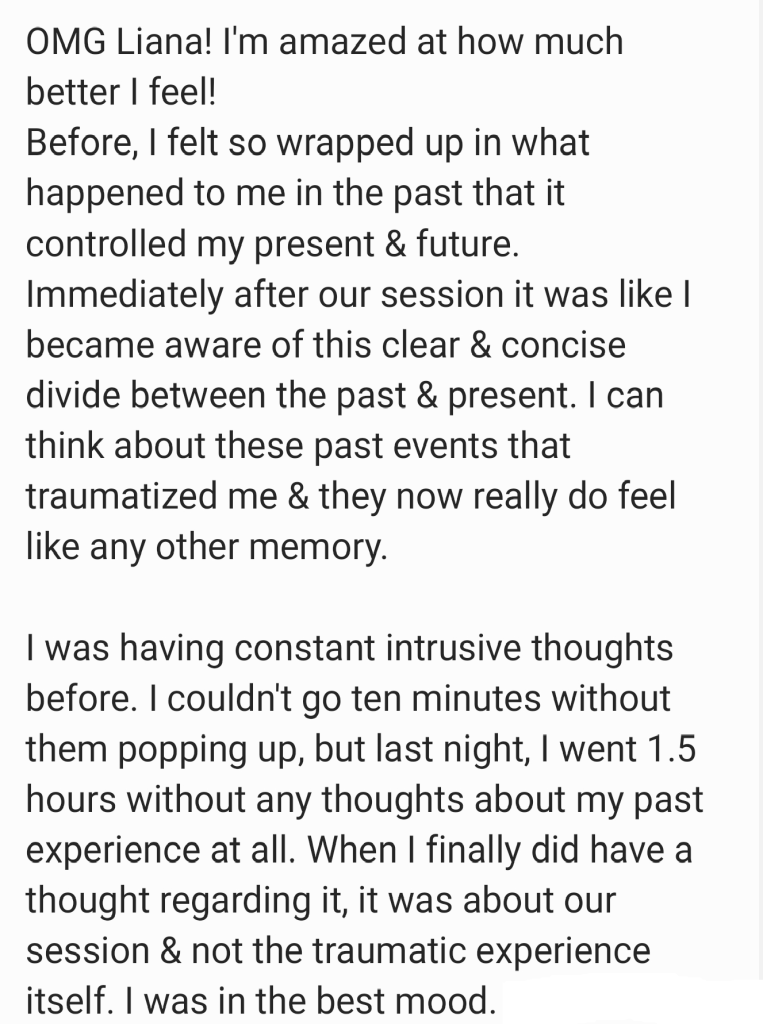
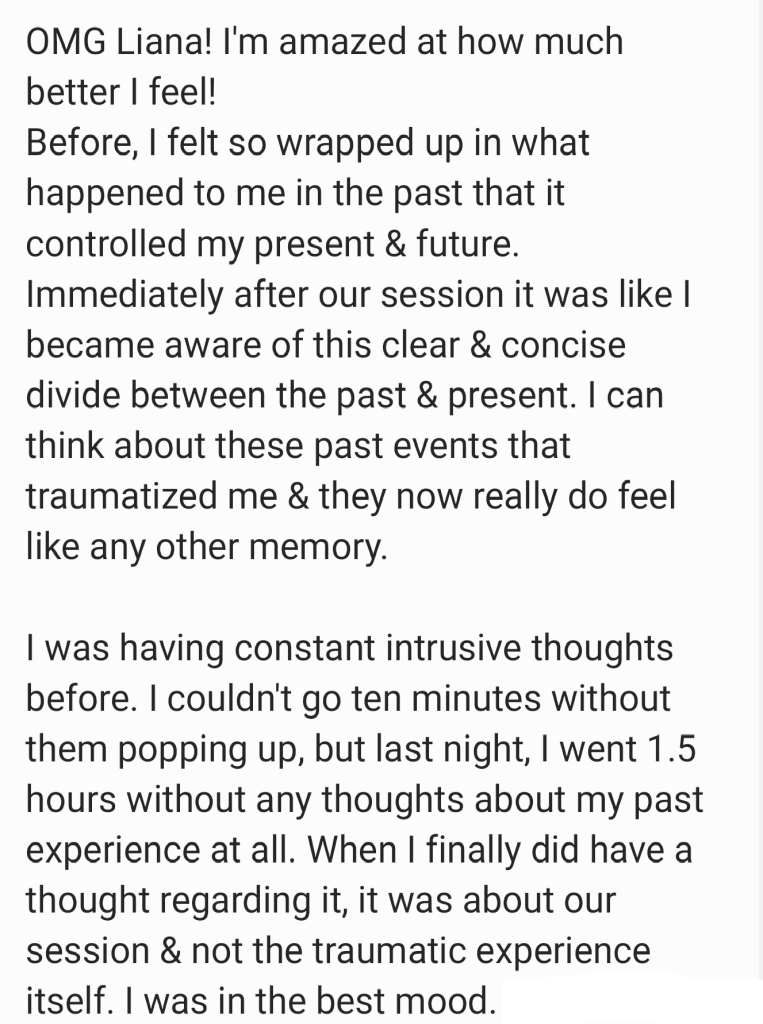
Clients often notice a shift quickly. You might feel calmer or notice the memory feels further away, like it is actually in the past – out of your present moment. Some clients feel like they can think more clearly. For simple trauma, even two to four sessions can help. For complex trauma, you might need more, but shift happens!
Why Talking About Trauma Doesn’t Help
Although it seems logical, talking about trauma doesn’t always help. In fact, with trauma, it can make things worse. This is an Iatrogenic effect of talk therapy, when it unintentionally makes trauma worse.
Trauma is not stored in the brain like other memories, it’s stored in the present tense and held in the body. Talking will only revivify these memories and make it feel like you’re reliving the trauma.
Remembering isn’t recovering.
Visual processing can help integrate trauma into the past. OEI helps you work through distressing memories based on how the brain handles and reconsolidates memories. The OEI process makes it feel safer. You don’t have to talk about the pst. You just have to notice the shifts – that’s the experiential part of OEI.
Who Can OEI Help?
OEI is helpful for people who’ve experience big T and little t trauma because trauma happens through your unique set of vulnerabilities. So if you feel traumatized, then you have been.
OEI can help with:
Trauma & PTSD
- Complex PTSD (CPTSD): Prolonged childhood abuse, affect dysregulation, dissociation.
- PTSD Symptoms: Flashbacks, nightmares, panic, sleep disturbances, avoidance (e.g., inability to drive).
- Traumatic Events: Childhood abuse (sexual, physical, emotional), sexual assault, ritual abuse, incest.
- Dissociation: Dissociative disorders, integrating dissociated parts, derealization.
Emotional & Affect Dysregulation
- States of Dysregulation: Panic, rage, shame, confusion, numbness, “freeze” responses.
- Mood Disorders: Anxiety, depression, agitated depression, hopelessness.
- Safety & Trust: Persistent fear, despair, distrust.
Relationship Issues
- Relational Conflict: Toxic relationships, sibling rivalry, family dynamics, adult issues stemming from childhood
- Attachment Challenges: Difficulty with attachment and relationships, trust, or social isolation
- Transference: Fear, anger, avoidance, or distrust projected onto to others
Cognitive & Self-Concept Challenges
- Negative Beliefs: Low self-worth, self-criticism, negative self-talk.
- Cognitive Symptoms: Difficulty focusing, verbalizing experiences, or mentalizing.
Physical & Somatic Symptoms
- Body Pain: Headaches, migraines, back/hip pain, facial tetany, phantom pain.
- Autonomic Dysregulation: Racing heartbeat, chest tightness, nausea, hyperventilation.
- Neurological Issues: Speech disruptions post-injury, visual distortions, dizziness.
Therapeutic Goals & Outcomes
- Integration: Resolving fragmented memories, fostering emotional regulation, trauma completion.
- Behavioral Shifts: Reducing fight/flight/freeze responses, improving concentration/work performance.
- Somatic Awareness: Addressing mind-body disconnection, increasing somatosensory awareness.
Personal Growth & Functioning
- Self-Improvement: Confidence, creativity, self-respect, assertiveness, stress management.
- Lifestyle Changes: Leaving self-destructive patterns, reclaiming control, reducing medication reliance.
OEI is a trauma therapy that integrates disturbing emotions, cognitions, somatic sensations, and visual perceptions. It works to address your brain and your body and the impacts you have experienced due to traumatic experiences. It is noted as one of the quicker therapies for these types of issues.
Let’s connect.
Listen, are you breathing just a little and calling it a life?
-MO
























Heal Your Trauma
Put the Past into the Past.
Access a Whole New Future.
 Accelerated OEI Therapy
Leave a comment