
What Is OEI Therapy?
Observed Experiential Integration (OEI) therapy is a trauma-focused approach that helps people process and heal from traumatic experiences. OEI uses visual pathways and specific eye movements to help the brain integrate memories and emotions that feel stuck or overwhelming.
How Does OEI Therapy Work?
OEI therapy works by having you cover or uncover one eye at a time while following an object with your eyes. This activates both sides of your brain and uses your visual system to process traumatic memories. The process helps your brain connect emotional and somatic experiences, so you can move past triggers and distress without needing to talk through every detail.
What Symptoms Can OEI Help With?
OEI can help with:
- PTSD and trauma symptoms
- Infidelity and betrayal
- Anxiety and panic
- Depression
- Phobias
- Negative self-talk and low self-esteem
- Relationship conflicts
- Dissociation and feeling “stuck”
- Physical symptoms linked to trauma, like headaches or nausea
Why OEI Therapy Is Different From Traditional Talk Therapy
Traditional talk therapy verbal pathways, like talking about trauma. OEI uses visual pathways to resolve and integrated trauma because trauma is not stored in memory with verbal narratives, like other experiences.
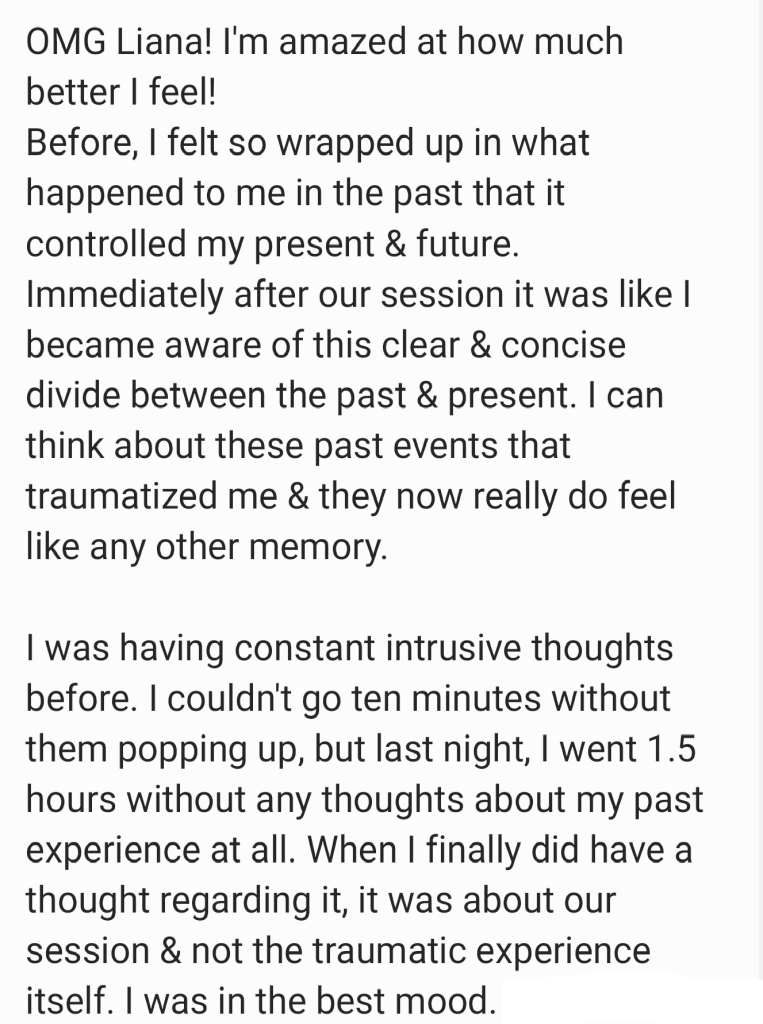
Because trauma has not been filed away properly, we aren’t in control of recall. You may have noticed this as you experience intrusive fragments of memory and intense feelings of the trauma that randomly pop into consciousness. We don’t have the memory, the memory seems to have us.
Because trauma can be resistant to talk therapy, OEI doesn’t require you to talk about painful, personal details.
Here’s the thing.
We are trying to get away from the trauma, not revivify it and have to relive it by talking about it.
Remembering is not recovering. Logic and understanding does not fix emotion.
Instead, you can pay attention to non-verbal shifts in your emotions, and body sensations as your brain processes the trauma in an OEI session. This non-verbal processing makes OEI effective, gentler and less likely to retraumatize compared to traditional talk therapy or even EMDR, Eye Movement & Desensitization Reprocessing.
The Science Behind OEI Therapy
OEI is grounded in neuroscience. Trauma fragments memories and emotions, making it hard for your brain to handle them and put them into a verbal narrative. By using visual pathways and bilateral stimulation, OEI helps your brain integrate these fragments, reducing distress and improving emotional balance. Research shows OEI can lower PTSD symptoms and help people feel less triggered and more in control.
What To Expect In An OEI Session
Trauma often leaves us dissociated from our bodies so we’re not sure what we are feeling. If we’ve been stuck in the trauma for a while, we might even start to identify with it and lose a a sense of ourself. We might not even be able to remember much, because of how the brain processes or does not process trauma.
In an OEI session, the therapist will ask you to cover or uncover one eye, or follow their finger with your eyes. There’s no need to talk about the trauma. You can focus on a memory, emotion, or body sensation, if you are able. If not, that is ok too.
Your brain knows what to do and will do all the work when guided by a certified OEI therapist.
Benefits Of OEI Therapy
- Reduces trauma and anxiety symptoms
- Improves emotional regulation
- Helps you feel less “stuck”
- Works for people who find talk therapy overwhelming
- Addresses both mind and body responses to trauma
Is OEI Therapy Evidence-Based?
Studies show OEI is effective in reducing PTSD symptoms and helping people move forward from trauma. It’s a gentle, science-backed approach that can help you heal without having to relive your trauma out loud.
OEI Can Put the Past into the Past
OEI can help with a wide range of trauma-related symptoms. It helps heal trauma by using visual pathways and eye movements to integrate traumatic memories and emotions that are stuck in the present tense. It’s gentle, doesn’t require you to talk through painful, personal detail.
When trauma is integrated, you feel like the past has been taken out of your future and the here and now, and put into the past, where it belongs.
If traditional talk therapy and EMDR hasn’t worked for you, OEI offers an effective way to process and move past trauma because it was designed to work with the way trauma is stored in the brain.
Listen, are you breathing just a little and calling it a life?
-MO

























 Accelerated OEI Therapy
Leave a comment