
What’s the Difference Between OEI and EMDR—and Why You Might Choose OEI Therapy
If you’ve been looking into trauma therapy, you’ve probably heard of EMDR (Eye Movement Desensitization and Reprocessing). It’s well-known and widely used and involves recalling a specific traumatic memories while engaging in bilateral stimulation, such as side-to-side eye movements or other rhythmic stimuli.
If recalling traumatic memories feels scary to you. You are not alone. You’re trying to get away from the intrusive thoughts and intense feelings that pop up randomly. You don’t want to revivify it by being forced to talk about it in therapy.
There’s another therapy that’s gaining attention for being just as effective—and sometimes easier to go through. It’s called OEI, or Observed & Experiential Integration. It evolved from EMDR but was designed to handle trauma without having to talk about the painful, personal details of your past.
OEI Therapy for Trauma
Both EMDR and OEI use your eyes to help the brain process trauma. This works because trauma is stored in the body and in the non-verbal, emotional part of the brain.
In EMDR, the therapist guides you to move your eyes back and forth while you bring up a painful memory. It can be intense because you stay with the memory while you try to process it and desensitize yourself to the trauma. Not cool, tbh.
OEI helps you move your the eyes in specific ways helps locate those memories taht are stuck
In OEI, you don’t need to recall painful memory of your trauma. You don’t even need to talk about it because OEI uses visual, not verbal pathways, like talking. The therapist uses gentle eye placements and visual techniques to help your brain shift how it’s holding the memory—to enable the brain to process and integrate the memory into the past.
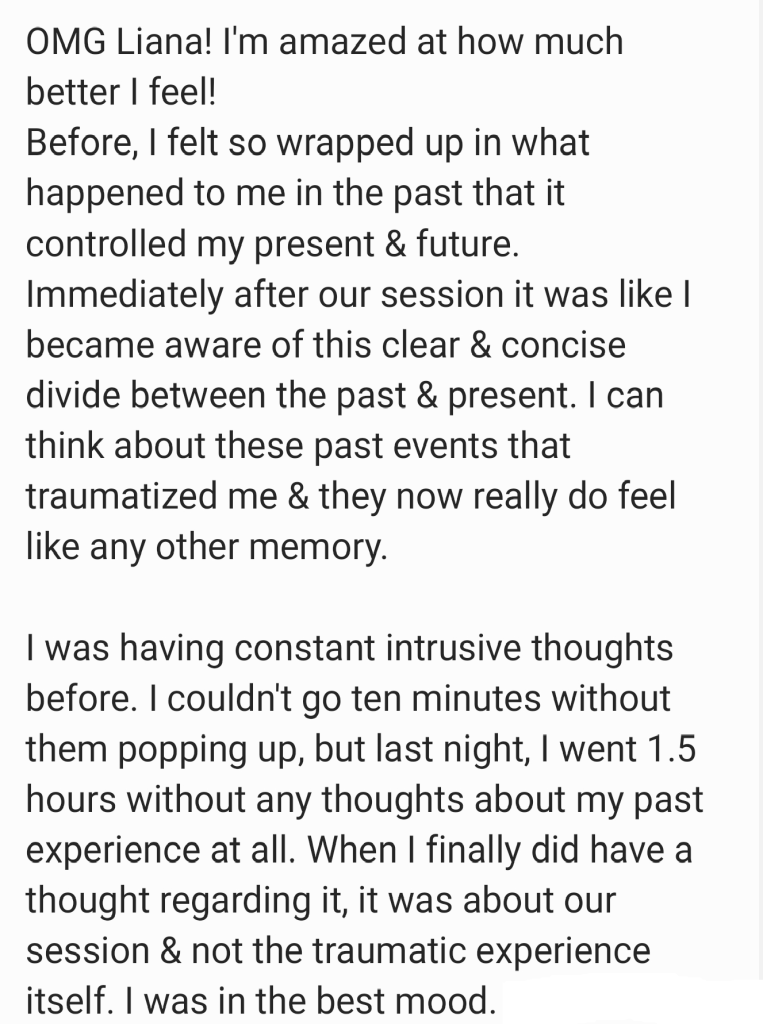
When the memory is integrated, you will feel like the past is in the past.
OEI is More Gentle
Many people find EMDR helpful, but for some, it can be overwhelming because it revivifies your trauma.
OEI is often a better fit for those who are already feeling anxious and triggered AF. It’s especially helpful if you’ve had a lot of (complex) trauma or if talk therapy and EMDR hasn’t worked for you.
With OEI, you work with your body and nervous system in the present-moment, no need to bring up the past. You notice and observe the shifts that are happening as they happen. Most people feel relief in their body even before they can put words to it.
You Stay in Control
In OEI therapy, you don’t have to dig up old memories. It’s not about going back into the past—it’s about freeing you from the way the past is still stuck in your system. Your access is through the here and now, using OEI technique to process and integrate fragments of memory that are stuck in the present moment.
Why Try OEI?
- You don’t have to bring up your past.
- It’s body-based and present-focused
- It’s gentle and often more effective than talk therapy
- It helps resolve trauma without retraumatizing you
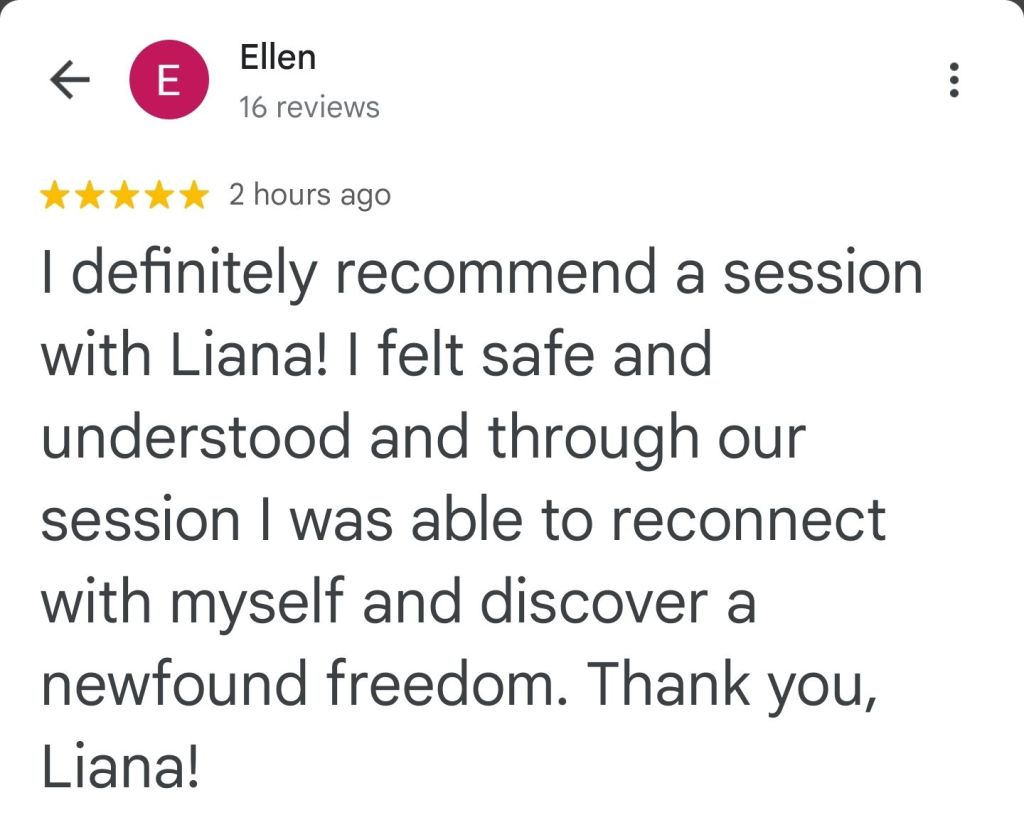
- People feel more grounded, calm, and relief, even from the first session
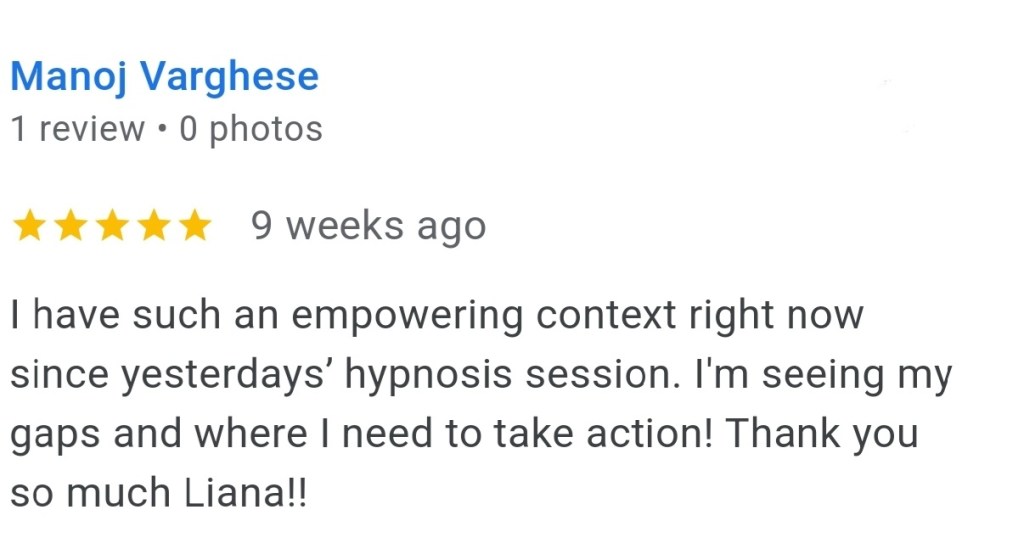
You can experience significant shift with OEI therapy, even if you’ve tried talk therapy and EMDR and still feel stuck.
OEI can help your brain do what it naturally wants to do: heal and move forward to a whole new future.
Let’s connect.
Listen, are you breathing just a little and calling it a life?
-MO



























 Accelerated OEI Therapy
Leave a comment