
What is OEI Therapy
OEI stands for Observed & Experiential Integration. It’s a trauma therapy that works with the brain and body. OEI uses eye positions and body awareness to help process stuck trauma. It was developed by Audrey Cook and Dr. Rick Bradshaw. OEI comes from EMDR but doesn’t rely on words or detailed memories.
Unlike talk therapy or EMDR, OEI doesn’t need you to fully remember what happened. It works with the part of the brain where trauma is stored—mostly the non-verbal part. This is why just talking often isn’t enough to move past trauma.
Why Trauma Needs a Different Approach
When trauma happens, the brain goes into survival mode. It doesn’t file away the memory in past tense like other memories. The brain is overwhelmed, drops the ball, and the memory shatters into fragments. And the memory gets stuck in the present tense. This is why you have the experience like the trauma is still happening in the here and now with intrusive thoughts and feelings in your body. This is why triggers feel so intense.
These intrusive thoughts hijack your here and now. These thoughts can lead to rumination and make you feel stuck. Sometimes talking about the trauma just makes this cycle worse. OEI focuses on calming the system, not digging up old pain.
Why Talking About Trauma Doesn’t Always Help
When we think of healing, we think of talking about things to figure them out. Talking sounds helpful, but with trauma it can make things worse. This is the iatrogenic effect of talk therapy on trauma, in seeking healing, talk therapy unintentionally makes things worse.
The brain and body treat the memory like it’s happening again. That’s why individuals often leave talk therapy feeling worse, and it’s this feeling that brings them back to talk about it because that is all they know.
People to go therapy because they want to figure things out, get insights, determine the next logical steps to healing. But with trauma, logic is like a mouse on the back of the elephant of emotion. The mouse might run from the head to the tail and think it’s making progress but the elephant keeps heading in the direction of the past.
Observed and Experiential Integration (OEI) therapy works differently. It helps the brain move the memory into the past without needing to talk through all the details. You just notice the shifts. That’s the “experiential” part of OEI.
Verbal Pathways Aren’t the Pathway to Healing
To heal trauma, we need to access the areas of the brain where the memories are stored.
Here’s the thing.
With trauma, verbal pathways do not lead to healing, like they do with other problems. This is because of the way they are processed or rather, not processed. The experience of trauma is emotional, it’s about survival. It’s the pre-verbal part of the brain that just reacts to the overwhelming experience. Trauma is so overwhelming that it doesn’t get a chance to get processed by the logical, verbal part of the brain.
Who ever said remembering is recovering, anyways?
This is why talking about the trauma can actually make things worse. You’re reliving it, not necessarily healing it because trauma is processed differently. If you think about how you re-experience trauma memories, they run you. they pop up into consciousness and hijack your present moment. It doesn’t appear you are in control of the recall as with other memories.
OEI gives the brain a safer way to process without reactivating the full emotional experience of the original trauma.
How OEI Uses Visual Pathways
When you experience trauma, memory fragments often get stuck in the emotional, non-verbal parts of the brain. OEI taps into those stored fragments by using the visual system as a pathway. It helps the brain reconnect/integrate those fragments and move the memory out of the present tense into the past tense.
OEI uses different eye positions, that are unique to you and your experience, to help the brain access and process memories. You might be asked to cover one eye or look in a specific direction. These small changes help the brain connect/integrate different parts of the brain so trauma can move out of the present moment, to the past, where it belongs. The brain does all the work. This makes OEI feel safer than traditional therapies, in which you have to talk about or recall trauma.
When the trauma is integrated, you will feel like the past is in the past. Distance from the experience will be created with each passing day, opening up space for hope and safety so you can create a whole new future, day by day.
What You Might Experience in a Session
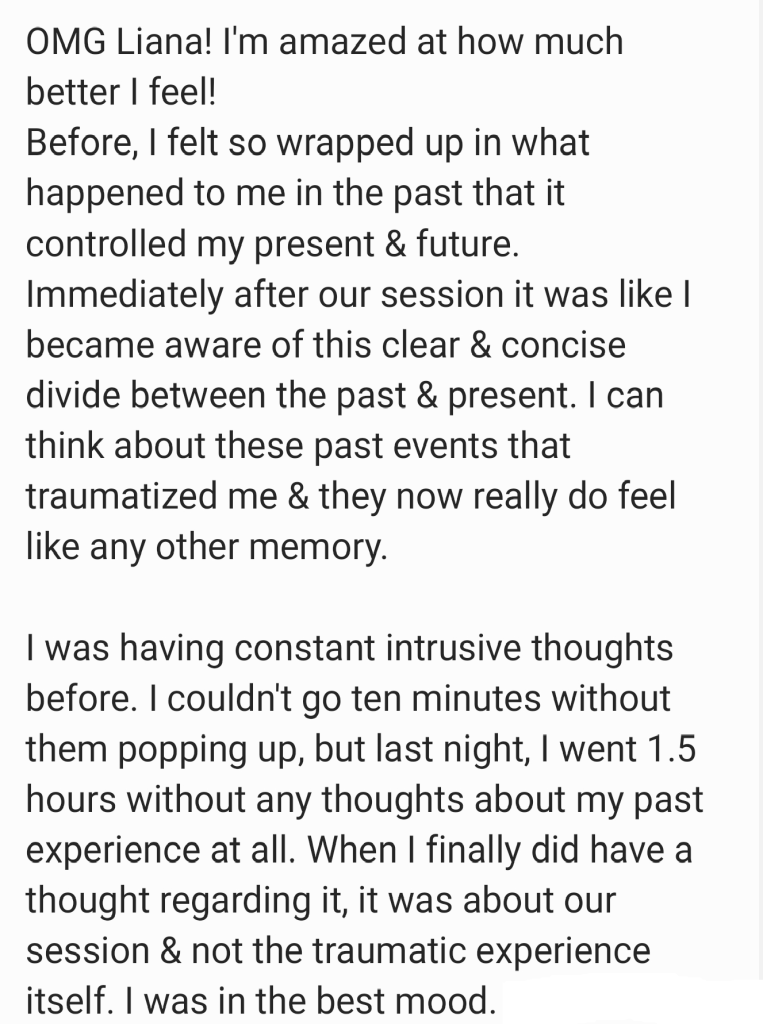
Many individuals feel a shift in feeling of being calm, grounded right in the session. You may think more clearly or feel more relaxed and safe in your body. The memory starts to feel further away, like it’s finally in the past. Some simple traumas shift in just a few sessions. Deeper or complex trauma usually needs more time, but the process is gentle and steady.
Who OEI Can Help
OEI can help if you’ve been through trauma—whether it’s big, small, or repeated over time. If you feel overwhelmed, stuck, or disconnected, OEI can be a useful approach.
OEI can support people with:
Trauma & PTSD
- Flashbacks, nightmares, panic, sleep issues
- Childhood abuse, sexual trauma, or neglect
- CPTSD from long-term stress or harm
Dissociation & Emotional Numbness
- Feeling frozen or disconnected
- Trouble feeling emotions or sensing your body
Anxiety & Mood Symptoms
- Panic, rage, shame, hopelessness
- Depression, anxiety, or emotional shutdown
Relationship Struggles
- Trouble with trust or closeness
- Patterns from past relationships that still affect you
Negative Self-Beliefs
- Harsh inner critic
- Low self-worth or shame
Body Symptoms
- Chronic pain with no clear cause
- Headaches, nausea, dizziness, muscle tension
How OEI Helps
OEI helps you reconnect with the parts of you that you lost during trauma. OEI helps you:
- Regain your sense of self.
- Feel safe in your body
- Reduce triggers and stress reactions
- Find emotional balance
- Improve focus and confidence
- Change patterns of thoughts and behavior that no longer serve you
OEI therapy helps integrate thoughts, emotions, body sensations, and visual memories. When trauma is integrated, it will feel like it is in the past. You get your here and now back. You find hope again and get your future back.
You don’t need to struggle or stay stuck any longer. The brain can do all the work for you, if you let it. You just notice what’s happening as you experience the OEI session, and the brain does what it knows how to do—heal.
Let’s connect.
Listen, are you breathing just a little and calling it a life?
-MO
Reviews






















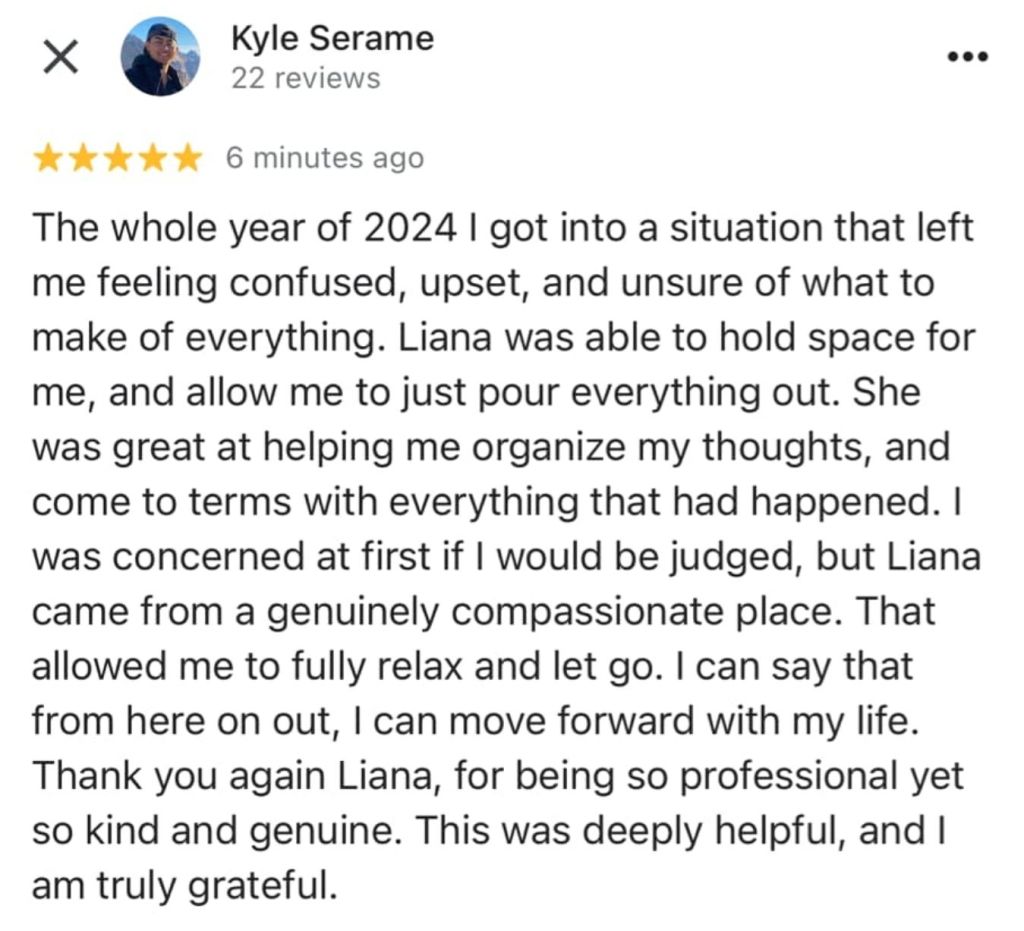

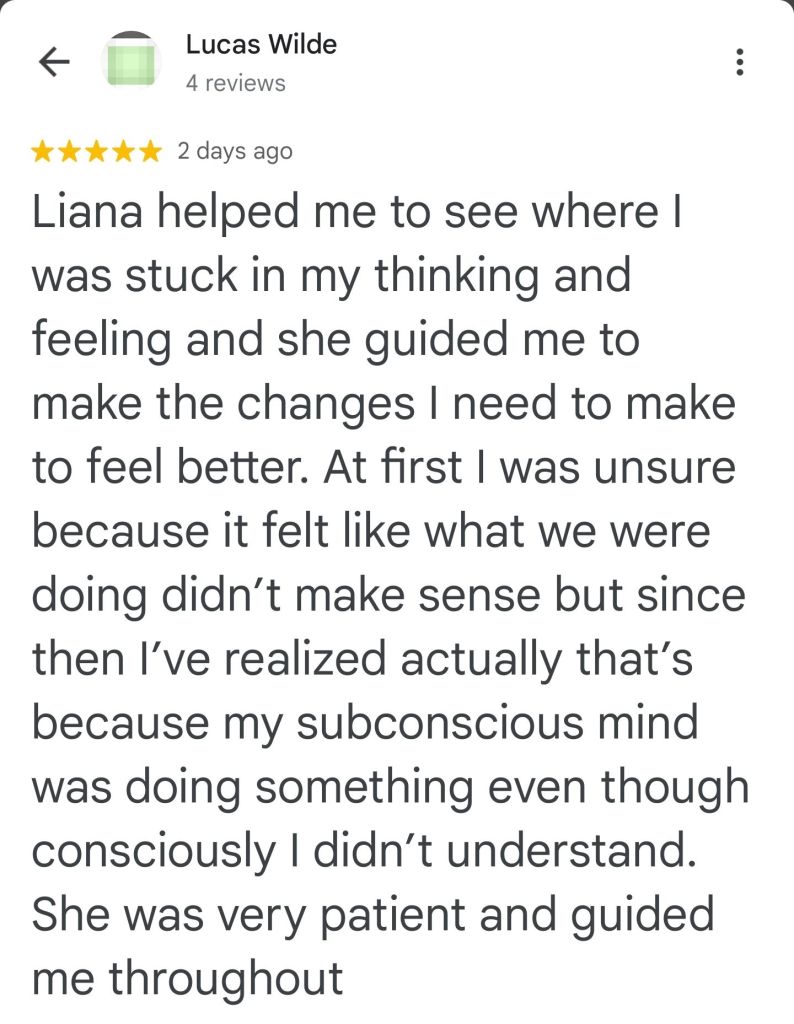
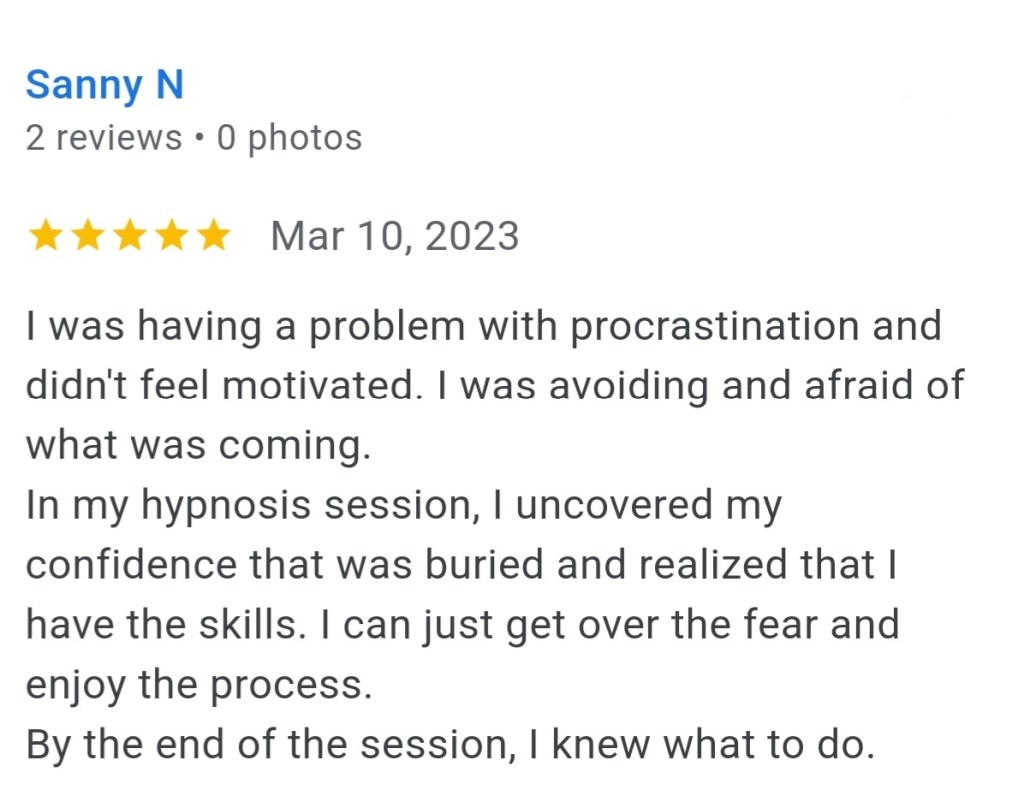

 Accelerated OEI Therapy
Leave a comment