The Benefits of Observed and Experiential Integration (OEI) Therapy: Healing Trauma Without Reliving It
If you’ve been through something painful and feel like you’re still stuck in it, no matter how much you’ve talked about it, analyzed it, or tried to let it go, I want you to know something: you’re not broken, and you haven’t failed at healing. You may simply have been using approaches that work against your brain instead of with it.
I’m a Trauma Recovery Specialist with the American Hypnosis Association, and for the past two years I’ve been using Observed and Experiential Integration, or OEI therapy, with my clients. In this post I’ll share what OEI is, why I chose it, what a session actually feels like, and the benefits I’ve seen firsthand, including one client’s story that shows what’s possible when we stop fighting the past and start working with the nervous system.
What Is Observed and Experiential Integration (OEI) Therapy?
OEI is a brain-based trauma therapy that evolved from EMDR (Eye Movement Desensitization and Reprocessing), one of the best-known approaches for treating trauma. Like EMDR, it works with how the brain naturally processes and stores experiences. But OEI takes a different path in one important way: it doesn’t require you to think about, describe, or relive the painful past.
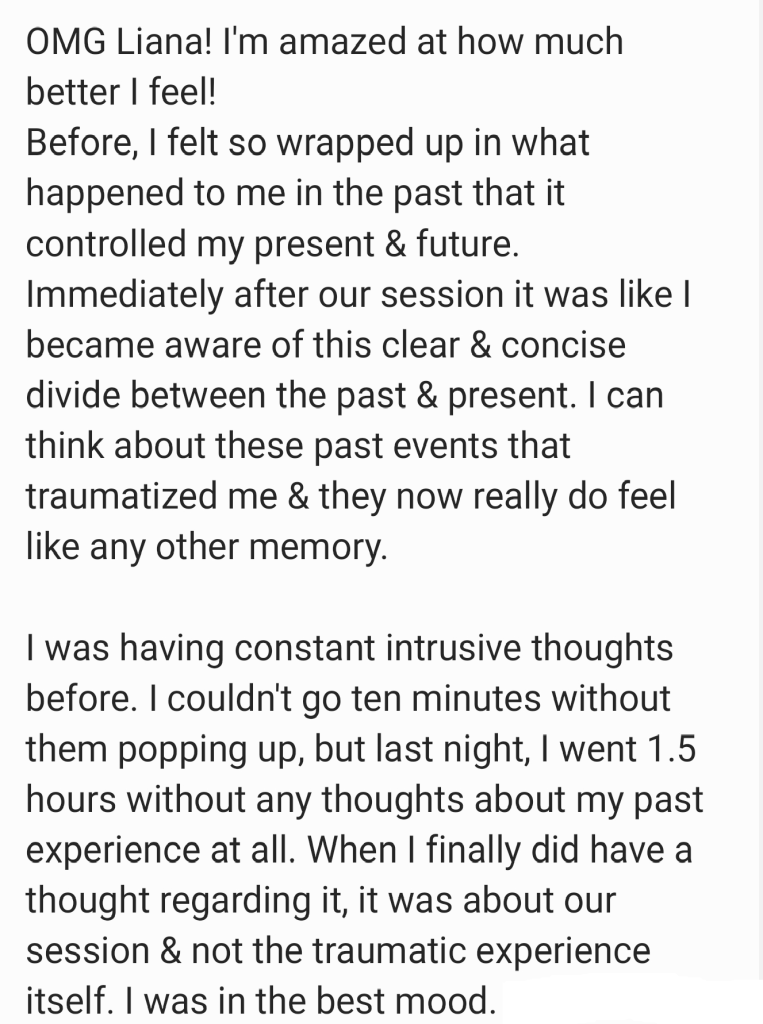
Instead, OEI creates the right conditions for your brain to integrate unprocessed trauma and file it away as memory, so it stops feeling like it’s happening right now.
Why Choose OEI for Trauma Recovery Work?
I was drawn to OEI for two main reasons.
It’s grounded in neuroscience
OEI is built on an understanding of how the brain and nervous system hold onto trauma and how they release it. Rather than relying on willpower or insight, it works directly with the brain’s own capacity to heal.
It avoids emotional flooding
Here’s something many people don’t realize: thinking about trauma reactivates the feelings of trauma. When you recount a painful experience, your brain and body can respond as if it’s happening all over again. That can lead to emotional flooding, where feelings become so overwhelming that healing can’t take place.
OEI sidesteps this. Because clients don’t have to go back into the story, we can work gently and safely, at a pace the nervous system can actually handle.
It works holistically with hypnotherapy
OEI works at a subconscious level, which makes it a natural, holistic partner to Accelerated Hypnotherapy. Together, they address trauma where it actually lives, beneath conscious thought, rather than trying to think our way out of something that was never a thinking problem to begin with.
What do People Get Wrong About Healing Trauma?
This is where my perspective may differ from what you’ve heard elsewhere.
Talking about it can keep you stuck
Most people trying to heal from trauma talk about it. They try to gather more information about what happened and hope that more information will bring more insight, and that insight will bring relief.
But in my experience, this is often what keeps people stuck. Every time you talk or think about what happened, you reinforce it in your brain. That’s why a memory can feel just as real today as it did the moment it happened. The experience is being strengthened again and again in your brain, your body, your thoughts, and your emotions, and it becomes overwhelming.
Why Doesn’t Letting Go” Work?
Many of us have been taught to breathe deeply and let it go. It sounds healthy, and it’s well-intentioned. But often, trying to let go is really a way of resisting what we’re feeling.
What you resist persists.
It sounds counterintuitive, but real change comes from leaning into the experience rather than pushing it away. That doesn’t mean diving back into the story. It means allowing the feelings that are present right now to be there, with support.
What Does an OEI Session Actually Feels Like?
If you’ve never experienced OEI, here’s what you can expect from the client’s chair.
We focus on the present, not the past
We don’t dig for more details about what happened or try to figure out why. We leave the past in the past. Instead, we focus on what’s coming up for you in this moment: the sensations, emotions, and reactions you’re experiencing right now.
You lean in instead of pushing away
Rather than trying to get rid of uncomfortable feelings, you’re guided to gently lean into them. This allows your brain to finally do what it was trying to do all along, which is process and integrate the experience.
You’re never doing it alone
This is a big part of why OEI is different from, say, sitting alone trying to meditate through overwhelming anxiety. In a session, I’m there with you, helping your nervous system co-regulate. Having a calm, safe presence alongside you makes it possible to stay with feelings that would be too much to face on your own.
We work a little at a time
We approach the trauma in small, manageable pieces, so you stay within a safe zone. This is where the brain does its best healing work.
How to Move Forward After Being Ghosted – Client Story:
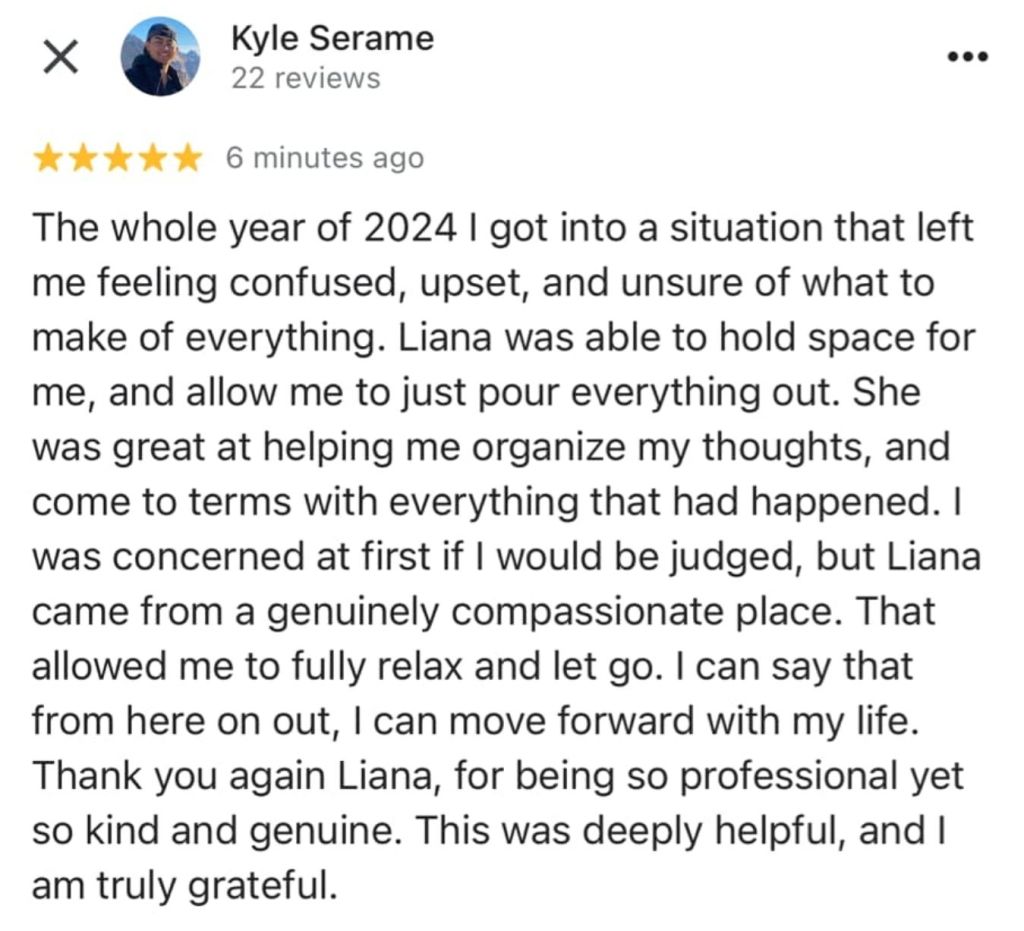
One of my clients came to me after her husband ghosted her. For months she was stuck in hypervigilance, hypo-arousal, and hypersensitivity. She was crying every single day.
Like many people, she believed that if she could just understand what happened, she’d be able to move on. She searched for every piece of information she could find about her husband and even hired a private investigator.
She got her answers, and she was still stuck.
That’s the part I want you to notice. Information didn’t heal her, because the problem was never a lack of information. Her nervous system was caught in a trauma response, and no amount of knowing could switch it off.
In our sessions, we didn’t focus on her husband or the details of what he’d done. We worked with how she was feeling and how her body was reacting in the present. We approached the trauma a little at a time, keeping her within a safe, manageable zone. That gave her brain the conditions it needed to update those old patterns.
Gradually, she began to experience more calm. And she was able to move forward in an empowered way, one that no longer depended on what her husband did or didn’t do.
What Are The Key Benefits of OEI Therapy?
Based on my work with clients, here are the benefits I see most often:
- You don’t have to relive the trauma. There’s no need to retell painful stories or go back into the worst moments of your life.
- It reduces the risk of emotional flooding. Working in small, manageable pieces keeps you within a zone where healing can happen.
- It works with your brain, not against it. OEI creates the conditions for your brain to integrate trauma and store it as memory rather than as an ongoing threat.
- It focuses on the present. Healing happens by working with what you’re experiencing now, not by digging up the past.
- You get support while you feel. Co-regulation with a trained practitioner makes it possible to stay with difficult emotions safely.
- It works at a subconscious level. That makes it a natural fit alongside hypnotherapy for a more holistic approach.
- It helps you reclaim your power. Clients often find they can move forward without needing answers, apologies, or change from anyone else.
Who is OEI Therapy Best For?
OEI is especially helpful for people who have experienced trauma, feel stuck in it, and have tried everything, but nothing seems to be working.
If you’ve talked about it endlessly, searched for answers, done the breathing exercises, and still feel like the past has a hold on you, OEI may offer what those other approaches couldn’t.
How Do I Stop Reliving the Past?
If you’re feeling stuck in the past and you’re curious about whether OEI is right for you, I’d love to talk with you. [Book your free Clarity call here] and we’ll explore what’s keeping you stuck and how we can help your brain finally do the healing it’s been trying to do.
You don’t have to keep reliving it to get through it.
Let’s connect.
Listen, are you breathing just a little and calling it a life?
-MO


























Leave a Reply